Imagine a typical Monday morning. Your desk is covered in notes, your inbox is overflowing, and your team is waiting for direction. For many business owners, the day feels like a race against a clock that is moving far too fast. This is where the concept of time efficiency comes into play. The less time you spend doing unnecessary work or procrastinating, the more time you can spend productively
In simple terms, time efficiency isn’t just about working faster; it’s about utilizing time efficiently. It is the ability to produce high-quality results using the least amount of wasted time and effort. When you master how to manage your time, you aren’t just checking off a to-do list—you are reclaiming your day.
In this guide, we will explore how understanding the many benefits of time efficiency can transform your business, reduce stress, and help your team reach its full potential.
Understanding time efficiency
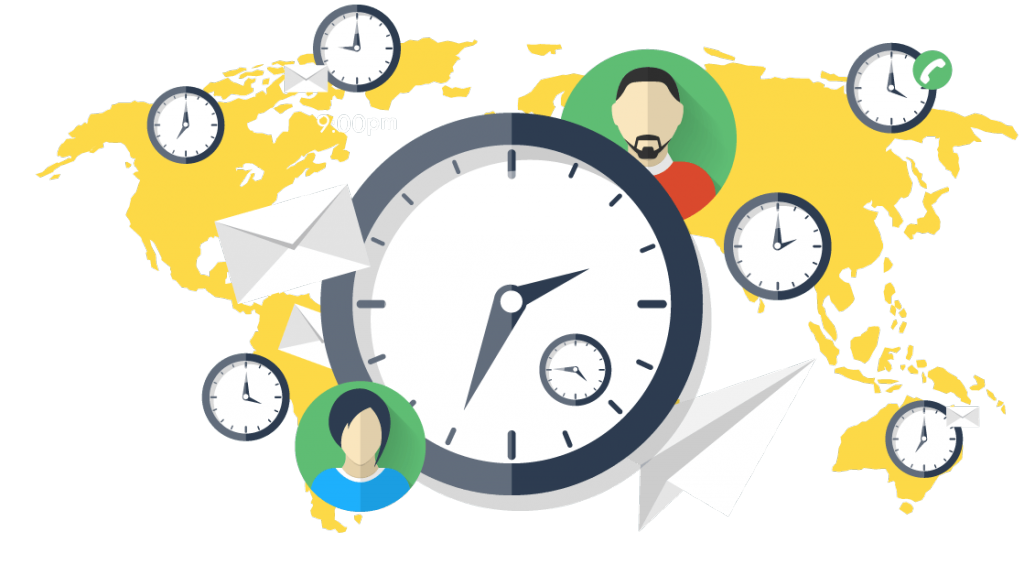
To define time efficiency, we must look at the output versus the input. If two employees complete the same task, but one takes two hours while the other takes four, the first is more time efficient. Being time efficient means you have the self-discipline to stay focused on what matters most.
When a business lacks a clear schedule, it often falls into the trap of busy work. Employees might spend their time on routine tasks that don’t actually move the needle. By improving efficiency, you ensure that every hour spent is an investment in the company’s growth. A few examples of proactive habits include the following: planning by scheduling and writing tasks providing peers and team members with timely updates.
The role of project management tools
At Office Punch, we know that true efficiency starts with clarity. That’s why we’ve built a platform that brings your team’s focus into a single, central location. Instead of the constant “what’s next?” guesswork, our integrated tools allow every team member to see their daily priorities and track all your tasks in real-time, thereby managing time efficiently.
But it’s about more than just a digital to-do list. It’s about precision. When you can accurately see how much time a specific project actually requires, your scheduling moves from hopeful estimation to data-driven strategy. In this post, we’ll explore how mastering your team’s time and task visibility can eliminate the last-minute scramble and help you hit every deadline with confidence.
The high cost of poor time management
Many leaders underestimate the damage caused by poor time management. It doesn’t just result in missed targets; it creates a culture of chaos. When a team feels overwhelmed by a mounting pile of work, the quality of their output begins to suffer.
Furthermore, wasted time is essentially wasted money. If your staff is spending hours on time consuming tasks that could be automated or streamlined, your “bottom line” is taking a hit. Recognizing these gaps is the first step toward a more profitable operation.
Impact on mental health and well-being
We cannot talk about productivity without talking about the person behind the work. Constant stress from time constraints leads to burnout. When employees feel they never have enough time to finish their work tasks, their mental health suffers.
A business that values time efficiency is also a business that values well-being. By helping your team manage time effectively, you reduce stress and foster a more positive atmosphere. This approach leads to less stress for the individual and greater productivity for the organization.
How to prioritize tasks effectively
One of the hardest parts of leadership is deciding what needs your attention right now. To prioritize tasks, you must distinguish between what is urgent and what is important. Some people use the “Eat the Frog” method—a concept often linked to Mark Twain—which suggests you should tackle your most difficult or important task first thing in the morning.
When you break down a project into manageable tasks, it feels less daunting. Instead of looking at a massive goal, focus on the tasks immediately in front of you. This clarity helps you avoid the feeling of being “paralyzed” by a heavy workload.
Learning to manage your time better
To manage your time is to manage your life. It starts with a simple audit: how do you actually spend your time? You might be surprised to find that “quick” checks of social media or online shopping are actually eating up hours of your week.
By creating a clear plan each morning, you set the tone for the day. Whether it is through time tracking apps or a simple paper planner, knowing where your minutes go is a game changer for professional growth.
When to delegate tasks to others
A common mistake for business owners is trying to do everything themselves. To be truly efficient, you must learn to delegate tasks. If a task does not require your specific expertise, it should be handled by someone else.
Delegation isn’t just about offloading work; it’s about empowering your team. It allows you to focus on high-level strategy while your staff gains experience handling certain tasks. This balance is vital for maintaining healthy professional relationships.
Strategies for increased productivity
Increased productivity is the natural byproduct of a solid time management strategy. One effective method is using time blocks. This involves dedicating specific chunks of time to one task only. For example, you might set aside 9:00 AM to 11:00 AM for focused work on a new proposal, during which you ignore all other distractions.
When you work this way, you achieve “deep work”—a state of intense concentration that allows you to complete complex work in less time than usual.
The art of manage time across teams
When you manage time on a departmental level, communication is your best tool. You need to know how much time is being spent on client calls versus internal meetings. A blog post or a newsletter might seem like a small task, but if it takes a team three days to produce, you need to look at the process.
Improving the way a team manages time often requires a cultural shift where “being busy” is no longer seen as a badge of honor, but “being effective” is.
Minimizing distractions in the office
Distractions are the enemies of efficiency. In a world of constant notifications, it is easy to lose time without even realizing it. To stay focused, many professionals use “disturb mode” on their devices during their most important work hours.
Encourage your team to avoid distractions like non-urgent emails or excessive “water cooler” talk during peak productivity periods. Even a five minute break is better than twenty minutes of distracted “half-work.”
Reclaiming your free time
The ultimate goal of time efficiency is to create more free time. If you work efficiently during office hours, you don’t have to take your work home. This allows you to spend quality time with friends and family, which is essential for a better work life balance.
When you have a clear boundary between your professional and personal time, you return to work refreshed and ready to tackle new challenges.
Designing a realistic daily schedule
A schedule is only useful if it is achievable. Setting unrealistic goals is a fast track to disappointment. When you create your daily schedule, build in “buffer time” for unexpected issues.
A realistic plan acknowledges that you are human. It includes time for lunch, breaks, and the occasional unplanned task. By being honest about what you can complete in a day, you build confidence and maintain a steady pace.
Benefits for personal and professional relationships
Time efficiency has a ripple effect on your personal and professional relationships. In the office, being reliable and meeting deadlines builds trust with your colleagues. You become known as someone who respects other people’s time.
At home, the benefits are even greater. When you aren’t stressed about unfinished tasks, you can be fully present with your loved ones. This balance strengthens your professional relationships and your personal bonds simultaneously.
Final thoughts on time tracking
Adopting a time tracking system isn’t about “spying” on employees; it’s about gaining insights. Time tracking apps provide the data you need to see where your business is losing time. They help you identify which projects are profitable and which are simply too time consuming.
By implementing these time management strategies, you aren’t just improving your business; you are improving the lives of everyone involved. You save time, reduce stress, and create a culture of excellence.

Frequently Asked Questions
1. What is the first step to improving time efficiency? The first step is awareness. Use a simple tool to track how you spend your time for one week. You cannot improve what you do not measure.
2. How do I help an employee who feels overwhelmed? Help them prioritize tasks. Break their large projects into smaller, manageable tasks and encourage them to use time blocks for focused work.
3. Will time tracking apps make my team feel pressured? Not if you frame it correctly. Explain that it’s a tool to help the company understand workloads, prevent burnout, and ensure everyone’s time is valued.
4. What is “deep work”? Deep work is a period of distraction-free concentration where you focus on a single, cognitively demanding task. It is the opposite of multitasking.
5. How does time efficiency improve work life balance? When you work more efficiently, you complete your work within office hours. This prevents “work creep” and ensures you have enough time for your personal life.
How Office Punch supports your goals
While understanding the theory of time efficiency is important, having the right tools to implement it is what truly transforms a business. This is where Office Punch becomes an essential partner for your team. Designed with simplicity in mind, it removes the guesswork from workforce management by providing a clear, real-time view of completed tasks and how time is invested across your organization.
Whether you are looking to streamline your payroll process or simply want to ensure that your team maintains a healthy work-life balance, Office Punch provides the data-driven insights necessary to make informed decisions and set realistic goals. It empowers employees to take ownership of their schedules and gives business owners the peace of mind that comes with a well-organized workplace.