Whether IT professionals qualify for overtime pay in Ontario depends on their actual job duties — not their job title, their salary, or the department they work in. Ontario Regulation 285/01 creates a specific exemption for certain IT roles, but that exemption is narrower than most employers realize. This post explains how the exemption works under the Employment Standards Act, 2000, which IT roles meet the standard, and what happens when employers apply it incorrectly. It is written for Ontario employers, HR managers, and payroll administrators who oversee technology staff.
Key Takeaways
- Ontario’s overtime threshold is 44 hours per week. Hours beyond that must be paid at 1.5 times the employee’s regular rate — no daily overtime applies under the provincial ESA.
- The IT professional exemption under Ontario Regulation 285/01 applies based on actual duties, not job title, department, or compensation level.
- A salaried IT employee is not automatically exempt from overtime under the ESA.
- Employers who misapply the exemption face Ministry of Labour back-pay claims for every employee incorrectly classified.
- Written agreements are required when time off is offered instead of overtime pay.
- In Canada, approximately 6% of workers are federally regulated and fall under the Canada Labour Code — the remaining 94%, including most Ontario IT workers, are provincially regulated.

What Ontario’s Employment Standards Act Says About Overtime
Under the Employment Standards Act, 2000, most Ontario employees are entitled to overtime pay after working more than 44 hours in a work week. Overtime must be paid at a premium of 1.5 times the employee’s regular rate — time-and-a-half for every overtime hour worked.
Ontario does not calculate overtime on a daily basis. No daily overtime threshold exists under the provincial ESA. This distinguishes Ontario from British Columbia, Alberta, and many international jurisdictions where daily thresholds of eight hours apply. In Ontario, only the total hours worked in a week determine whether overtime has been triggered.
The 44-Hour Threshold and Premium Pay
For hourly employees, the overtime calculation is straightforward: hourly rate multiplied by 1.5 for every hour worked over 44 in the work week. For salaried employees, the weekly salary must first be converted to an equivalent hourly rate, which then becomes the base for the overtime premium. Overtime calculations must also include commissions and bonuses where those form part of an employee’s regular pay. Employers must keep accurate records of actual hours worked — not scheduled hours — for every non-exempt employee.
Do Salaried Employees Qualify for Overtime Pay?
Yes. A salary does not eliminate the right to overtime pay under the ESA. Salaried employees are entitled to overtime on the same basis as hourly employees once hours worked exceed 44 in a week. The widespread belief that salaried workers have overtime baked into their annual compensation has no basis in the ESA. If an employee is not covered by a specific statutory exemption, they are entitled to overtime pay regardless of how their compensation is structured or what their offer letter says.
The IT Professional Exemption Under Ontario Regulation 285/01
Ontario Regulation 285/01 creates an exemption for information technology professionals from overtime pay, daily and weekly limits on hours of work, and mandatory eating and rest periods. The exemption is real — but it rests entirely on what the employee actually does, not on what their title or department says.
What the Exemption Actually Requires
The regulation defines an IT professional as an employee primarily engaged in the investigation, analysis, design, development, implementation, operation, or management of information systems through the objective application of specialized knowledge and professional judgment.
Three elements determine whether the exemption applies. First, the employee must be primarily engaged in the listed activities — those functions must make up the core of their role, not a secondary component of it. Second, the work must relate to information systems specifically. Third, the employee must be applying specialized knowledge and professional judgment — not following routine procedures or executing defined instructions set by someone else.
That third element is where most misclassification errors occur. Applying specialized knowledge and professional judgment means the employee makes independent technical decisions that require expertise most people in the organization do not possess. A software architect designing a new system infrastructure meets that standard. A technician resetting passwords and following a support script does not.
Applying the Duties Test in Practice
The duties test has two practical anchors. At one end, a role that requires independent technical decision-making — where the output depends on the employee’s own specialized assessment of a problem — aligns with the exemption’s intent. At the other end, a role that primarily follows procedures, scripts, or instructions set by others — where most tasks are replicable by following a defined process — does not.
Every role that falls between those anchors requires a case-by-case duties assessment based on what the employee actually does day to day. Title, compensation level, and department membership determine nothing. The employer is responsible for confirming, through a documented duties analysis, that each individual employee meets the standard before applying the exemption.
IT Consultants: A Separate Exemption Under the ESA
A separate exemption applies to information technology consultants under Section 3 of the Employment Standards Act, 2000, which took effect January 1, 2023. Unlike the O. Reg. 285/01 exemption for IT professionals, the consultant exemption switches off the entire ESA — not only overtime — meaning the hourly limits, rest rules, and eating period requirements also do not apply.
Four conditions must all be met for the exemption to apply: the consultant works through their own corporation or is a registered sole proprietorship; there is a written agreement in place between the consultant and the client; the consultant is paid at a rate of at least $60 per hour; and the consultant is paid when and in the amount the written agreement specifies. If any one condition is not met, the ESA applies in full.
This is a distinct path from the IT professional exemption under O. Reg. 285/01. A consultant who operates through their own corporation and meets all four conditions qualifies under the ESA s.3 consultant exemption regardless of whether the duties test for the O. Reg. 285/01 professional exemption is satisfied.
The Two Most Common Employer Mistakes
The Salaried Exemption Myth
The most common error is assuming that because an IT employee earns a fixed annual salary or a high compensation package, overtime is automatically included. Employers sometimes reinforce this with offer letter language stating the salary covers “all hours worked” or is “inclusive of overtime.” That language carries no weight under the ESA. If the employee does not meet a valid exemption, they are entitled to overtime pay regardless of what the offer letter says.
The Blanket IT Title Assumption
Close behind is the assumption that any employee working in a technology function — anyone holding a title like Analyst, Engineer, or Consultant — is automatically exempt under Ontario Regulation 285/01. That is not how the exemption works. The regulation requires a duties-based assessment of each specific role. Applying the exemption across an entire IT department based on department membership or job title is a misapplication that creates back-pay exposure for every employee incorrectly classified.Special Rules: Instead of Overtime Pay and Averaging Agreements
Instead of Overtime Pay
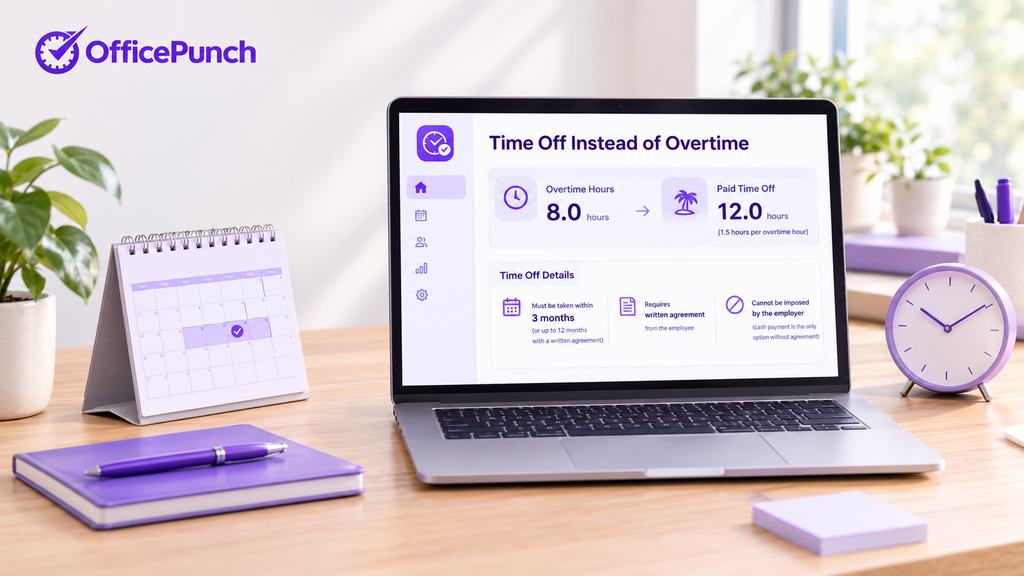
An employer and employee can agree in writing that the employee will receive paid time off instead of overtime pay. For each overtime hour worked, the employee receives 1.5 hours of paid time off. That time off must be taken within three months of the week in which the overtime was worked, unless a written agreement extends the period to up to twelve months. Employers cannot impose this arrangement unilaterally — a written agreement from the employee is required. Without it, cash payment at the overtime rate is the only compliant option.
Averaging Agreements
Averaging agreements allow overtime to be calculated across a period of two or more weeks rather than on a strict weekly basis. These agreements must be in writing and comply with ESA requirements. They are appropriate when an employee’s hours fluctuate significantly from week to week. An averaging agreement does not eliminate the overtime entitlement — it changes the period over which it is calculated.
Managers and Supervisors in IT
Managers and supervisors may be exempt from overtime under the ESA. This exemption also turns on actual duties. An IT employee whose primary work is technical — writing code, managing systems, conducting security reviews — is not exempt simply because “Manager” appears in their title. The exemption applies when the employee performs only managerial or supervisory work, with other tasks only now and then.
Calculating Overtime for IT Employees
For IT employees who are not exempt, the overtime calculation follows the standard ESA formula: take the employee’s regular hourly rate — or convert the weekly salary to an hourly equivalent — and multiply by 1.5 for every hour worked over 44 in the work week. Commissions and bonuses that form part of regular pay factor into the base rate. The calculations for overtime pay can differ between roles, but the 44-hour weekly threshold applies uniformly to all non-exempt employees regardless of industry or seniority.
Employers cannot avoid the overtime obligation by declining to authorize hours after the fact. If a non-exempt IT employee regularly works past scheduled hours, those additional hours count toward the 44-hour threshold whether or not formal approval was given.
Frequently Asked Questions
Do overtime rules apply to IT professionals in Ontario?
It depends on the role. Ontario Regulation 285/01 exempts certain IT professionals from overtime, but only those primarily engaged in information systems work through specialized knowledge and professional judgment. Roles that primarily follow defined procedures or instructions rather than applying independent technical judgment do not meet that standard and are entitled to overtime pay after 44 hours in a week under the Employment Standards Act.
What is the overtime pay rate under Ontario’s ESA?
The overtime rate is 1.5 times the employee’s regular rate of pay — time-and-a-half — for every hour worked over 44 in a work week. Ontario does not apply daily overtime. Only the total weekly hours determine whether the threshold has been reached, unlike many other Canadian provinces and international jurisdictions where daily thresholds also apply.
Are salaried employees in IT entitled to overtime pay?
Yes. A salary does not exempt an IT employee from overtime under the ESA. Salaried employees whose roles do not meet a specific statutory exemption are entitled to overtime after 44 hours worked in a week, calculated at 1.5 times their equivalent hourly rate. The offer letter language employers often rely on has no standing under the Act.
Can an employer offer time off instead of overtime pay?
Yes, but only with a written agreement from the employee. For each overtime hour worked, the employee receives 1.5 hours of paid time off in lieu of cash payment. That time off must be taken within three months of the week the overtime was worked, unless a written agreement extends the period to twelve months. Employers cannot impose this arrangement without employee consent.
What are averaging agreements and when do they apply?
Averaging agreements allow overtime to be calculated over two or more weeks rather than weekly. They must be in writing and meet ESA requirements. They suit employees whose hours fluctuate significantly from week to week and can reduce the number of pay periods in which overtime is triggered — but they do not eliminate the entitlement.
Are there special rules for calculating overtime for hourly employees versus salaried employees?
For hourly employees, the calculation is the hourly rate multiplied by 1.5 for hours over 44. For salaried employees, the weekly salary is converted to an equivalent hourly rate first, which then becomes the base for the premium. In both cases, commissions and bonuses that form part of regular pay are included. The calculation method differs, but the weekly threshold and the overtime rate are the same.
Can an employer refuse to pay overtime to IT staff by citing job title?
No. Job title does not determine overtime eligibility under the ESA. Exemptions from overtime pay are based on actual job duties, not how a role is labelled. An employer who withholds overtime based on title alone — without a duties assessment confirming the employee meets the standard under Ontario Regulation 285/01 — is exposed to back-pay claims and Ministry of Labour enforcement.
Track Hours to Support ESA Compliance
Overtime compliance for non-exempt IT employees starts with accurate records of actual hours worked. Employers must be able to demonstrate, with contemporaneous documentation, that the 44-hour threshold was not reached — or that overtime was correctly calculated and paid when it was. Without that record, there is no factual basis to respond to a Ministry of Labour claim.
Office Punch records session start and end times automatically at PC login for Windows and Mac teams. Managers see a real-time daily attendance dashboard and can export records to Excel for any date range — no manual timesheet entry required. For developer and technology teams specifically, see time tracking for developers. Start with the free plan for up to five users at officepunch.com.