Ontario employers are legally required to provide a 30-minute meal break after every five consecutive hours of work — but tracking whether that break actually happened, and whether it was truly uninterrupted, is a separate obligation that many workplaces handle poorly. This post explains what the Employment Standards Act, 2000 requires for breaks, when a break must be paid, what a defensible tracking system looks like, and where most employers leave themselves exposed. It is written for Ontario employers, HR managers, and operations staff who need to document break compliance and protect themselves in an ESA audit.
Key Takeaways
- Ontario’s ESA requires a 30-minute meal break after every five consecutive hours of work. That break is generally unpaid — but only if the employee is completely free from work duties during it.
- Coffee breaks and short rest breaks are not required by the ESA. They are provided at the employer’s discretion.
- Automatic payroll deductions for break time are not a compliant substitute for actual break records. Contemporaneous timestamps carry significantly more weight in an ESA audit than auto-deducted timesheets.
- If an employee is required to remain on call or monitor communications during a meal break, that break is not free from work and must be paid as working time.
- By oral or written agreement, a 30-minute eating period can be split into two shorter periods, as long as the combined total is at least 30 minutes.
- Employees must receive at least 11 consecutive hours off work in each day — this applies alongside, not instead of, the meal break requirement.
- Tracking missed or interrupted breaks through exception reports is the most practical way to identify compliance problems before they escalate.
- Rest entitlements apply equally to day and night shifts — shift length and shift timing do not change the statutory minimum.
What Ontario’s Employment Standards Act Requires for Breaks
The ESA sets out minimum break entitlements that apply to most Ontario employees. These rules do not cover every industry equally — certain sectors operate under modified standards — but for the majority of workplaces, the core requirements are consistent.
The 30-Minute Eating Period After Five Consecutive Hours
Under the Employment Standards Act, 2000, an employer must provide at least one meal break of 30 minutes after every five consecutive hours of work. The eating period does not need to fall at exactly the five-hour mark — it must occur before the employee has worked more than five consecutive hours without a break.
An employer and employee can agree — orally or in writing — that this eating period is split into two shorter breaks, as long as the combined duration reaches 30 minutes. Outside of that specific agreement, one continuous 30-minute unpaid meal break — commonly called a lunch break — is the standard. The timing of the eating period is tied to shift length: it must occur before the employee has worked five consecutive hours without a stop, regardless of whether the shift falls during the day or on a night shift.
When a Meal Break Must Be Paid
Meal breaks are generally unpaid under the ESA. A meal break is lawfully unpaid when two conditions are met: the employment contract does not provide for paid breaks, and the employee is completely free from work duties during that time — no monitoring obligations, no requirement to respond to calls or messages, no expectation to remain available for work.
If the employer places any restriction on what an employee can do during the break — requiring them to monitor a phone line, field phone calls, respond to customers, or eat at their desk to keep an eye on operations — that break is no longer relieved time. The employee must be paid for that time, regardless of what the payroll system records. The same applies where the employment contract expressly provides for paid breaks: the contractual term governs, and the break is paid regardless of whether the employee performs work during it.
The most common failure pattern is exactly this: an employer deducts 30 minutes from each shift automatically at payroll, while the employee’s actual break involves monitoring emails, fielding calls, or remaining available for work. The payroll deduction creates a record that looks compliant. The actual working pattern is not.
Coffee Breaks: What Break Laws Do and Do Not Require
Ontario’s ESA does not require employers to provide coffee breaks, rest breaks, or any short break beyond the 30-minute eating period after five consecutive hours. Additional rest breaks — whether paid or unpaid — are entirely at the employer’s discretion, unless a collective agreement specifies otherwise.
When an employer does provide coffee breaks or rest periods voluntarily, the terms are largely set by the employer’s own policy. The key qualifier on pay: if the employer requires the employee to remain at the workplace during a coffee break, that break must be paid at minimum wage. A coffee break is only lawfully unpaid when the employee is completely free from duties and free to leave the workplace.
The Most Common Way Employers Get Break Tracking Wrong
The most defensible break record is a contemporaneous one — a timestamp showing when an employee stopped work and when they resumed. The least defensible is an automatic payroll deduction applied to every shift regardless of what actually happened that day.
Automatic deductions for break time are a shortcut that creates a specific kind of audit exposure. If an employee regularly eats at their desk, monitors messages, or responds to calls during a break that is being deducted from their pay, every one of those shifts contains an underpaid period of working time. If that pattern surfaces in an ESA complaint or audit, the auto-deducted timesheet does not support the employer’s position — it actively undermines it, because it shows the deduction was applied without verifying that a real break occurred.
The second failure pattern is the passive on-call expectation: no written policy requires employees to remain available during breaks, but workplace culture or managerial behaviour creates an implicit expectation that they do. Employees who feel they cannot truly disconnect during a break — because ignoring a manager’s message or stepping away from the floor will reflect poorly — are effectively on duty during that time. That time must be paid.
What a Defensible Break Tracking System Looks Like
Under the ESA, employers are required to record the dates and times an employee worked. That record-keeping obligation extends to breaks when the break record is needed to demonstrate that the eating period was provided and that the five-consecutive-hours rule was not exceeded.
Actual Timestamps Over Automatic Deductions
A defensible break record starts with actual employee activity data — a login event when the employee returns from break, a punch-out at the break start, or a session-level record from the employee’s workstation. These are contemporaneous records that reflect what happened, not what the payroll formula assumes happened.
Automatic deductions remain common in small workplaces because they are operationally simple. But if an ESA audit or complaint requires the employer to demonstrate that a break was provided and was truly uninterrupted, a payroll deduction line does not answer that question. A timestamped break record does.
Physical Separation and Exception Reporting
The other component of a defensible system is a process for handling exceptions — shifts where a break was shortened, interrupted, or missed due to operational demands. If an employee was not able to take a full 30-minute break on a given day, that exception should be documented, the reason recorded, and the affected time compensated correctly.
Tracking missed or interrupted breaks through a simple exception log — identifying which employee, which shift, what happened, and how it was resolved — creates the kind of audit trail that demonstrates the employer is actively managing compliance rather than relying on a blanket deduction. Running periodic compliance reports to identify patterns of missed breaks can also surface understaffing issues or scheduling problems before they become complaint-level incidents. Automating alerts when an employee’s session data suggests a break was not taken adds another layer without requiring manual monitoring.
Paid vs. Unpaid Breaks: Defining Your Break Policy
An explicit written break policy that defines which breaks are paid and which are unpaid is both a compliance tool and a practical management document. It sets the minimum standards employees can expect, reduces the ambiguity that leads to on-call expectations during meal periods, and creates a reference point if a dispute arises. Employment contracts cannot reduce ESA break entitlements below the statutory minimum — any contractual term that attempts to do so has no effect.
That policy should address at minimum: how many breaks employees receive, which are paid, what employees may and may not do during unpaid breaks, and how employees should record or flag a missed or interrupted break. Encouraging employees to actually disconnect during breaks — to step away from screens and work obligations — is not just a legal protection for the employer. Short rest periods reduce cognitive fatigue and errors, and a workplace culture that treats breaks as a real stop, not a soft pause, reflects that in its output. Automated reminders that prompt employees to step away when their session has been continuous for a threshold period can support this without requiring supervisory intervention.
Employer Record-Keeping Obligations for Breaks
Under section 15 of the ESA, employers must keep records of hours worked for each employee. That record-keeping requirement is the foundation for demonstrating break compliance — an employer who cannot show when an employee’s work session started and ended has no basis for proving that the five-consecutive-hours threshold was not exceeded and that an eating period was provided.
Records must be retained for three years from the date they were made. This applies to daily work logs, pay stubs, and any other documentation relevant to an employee’s ESA entitlements. If an ESA officer requests records during an inspection or in response to a complaint, the employer must be able to produce them.
The practical implication for break tracking is that an employer who relies on a supervisor’s memory, an unsigned paper log, or an automatic payroll deduction has records that do not support their position in a dispute. The standard an ESA officer applies is contemporaneous documentation — a record made at or near the time of the event, not reconstructed from payroll assumptions or anecdotal accounts.
For remote workers, the record-keeping obligation is identical. The absence of a physical workplace does not change the employer’s duty to document hours worked. An employee time tracking system that captures actual session activity from a remote employee’s computer produces the same kind of contemporaneous record as a physical punch clock — and is more auditable, because the data is timestamped and machine-generated rather than manually entered.

Daily Rest and Hours of Work Context
Break compliance does not exist in isolation from the broader hours of work rules. Employees must receive at least 11 consecutive hours off work in each day and at least eight hours between the end of one shift and the start of the next. These daily rest requirements apply on top of the meal break obligation.
Meal breaks are time away from work during a shift — they do not count toward the 11-hour daily rest minimum, which is calculated on a per-day basis across each 24-hour period. An employee who works a long shift with a meal break still needs 11 consecutive hours of rest before beginning their next shift. The 11-hour daily rest rule cannot be waived by agreement.
Federally Regulated Workplaces: Different Rules Apply
Employers in federally regulated industries — banking, airlines, telecommunications, and interprovincial transportation — are governed by the Canada Labour Code rather than the Ontario ESA. The break requirements under the Canada Labour Code differ from Ontario’s provincial rules. Approximately 6% of Canadian workers fall under federal jurisdiction; the remaining 94% are governed by their province. Ontario employers in federally regulated sectors should confirm their break obligations under the federal regime rather than the provincial one.
Frequently Asked Questions
How do you track employee breaks effectively?
A defensible break-tracking system relies on actual timestamps — login and logout events, session activity records, or punch-based records — rather than automatic payroll deductions. The system should also include a process for documenting and resolving exceptions: shifts where a break was missed or shortened. Periodic compliance reports that flag patterns of missed breaks help identify systemic issues before they surface in a complaint.
What do Ontario’s hours of work rules say about break time?
Ontario’s ESA requires a 30-minute meal break after every five consecutive hours of work. No coffee breaks or additional rest periods are required by law beyond that. Employers may provide additional breaks at their discretion. All break time — whether required or voluntary — must be paid if any work obligation applies during the break.
Are coffee breaks required under Ontario’s employment standards?
No. Ontario’s ESA does not require employers to provide coffee breaks or short rest periods beyond the mandated eating period after five consecutive hours. When employers do offer coffee breaks voluntarily, those breaks are paid or unpaid based on the employer’s written policy — but if the employee is expected to remain on duty or available during them, they must be paid.
How many breaks is an employee entitled to in Ontario?
Under the ESA, employees are entitled to one 30-minute eating period for every five consecutive hours worked. By oral or written agreement, that 30-minute period can be split into two shorter periods, as long as the combined total reaches 30 minutes. Beyond that, additional coffee breaks or rest periods are not legally required — they exist only where the employer’s policy or a collective agreement provides for them.
What are the break laws for daily rest in Ontario?
In addition to the meal break entitlement, employees must receive at least 11 consecutive hours off work in each 24-hour period. That is a daily rest requirement separate from the in-shift eating period. Employees must also have at least eight hours between the end of one shift and the start of the next. The 11-hour daily rest minimum cannot be waived by agreement.
What breaks are required in federally regulated workplaces?
Employers in federally regulated industries — banking, telecommunications, airlines, and interprovincial transportation — operate under the Canada Labour Code, not Ontario’s ESA. Break requirements differ between the federal and provincial regimes. Ontario employers in those sectors should confirm their specific obligations under the Canada Labour Code rather than applying the provincial standard.
When must an employer pay for break time?
Break time must be paid whenever the employee is not fully relieved of work duties — if they are required to monitor phones, respond to messages, or perform any work during the break. Breaks are lawfully unpaid only when the employee is completely free from any work obligation during that time. Automatic payroll deductions that assume a break occurred do not satisfy this standard if the employee was actually required to remain available.
Track Sessions and Hours to Support Break Compliance
Break compliance depends on accurate records of when employees start and stop work. A system that records actual session activity — not just scheduled hours — gives employers the contemporaneous documentation they need to demonstrate that the five-consecutive-hours threshold was not exceeded and that breaks were provided as required.
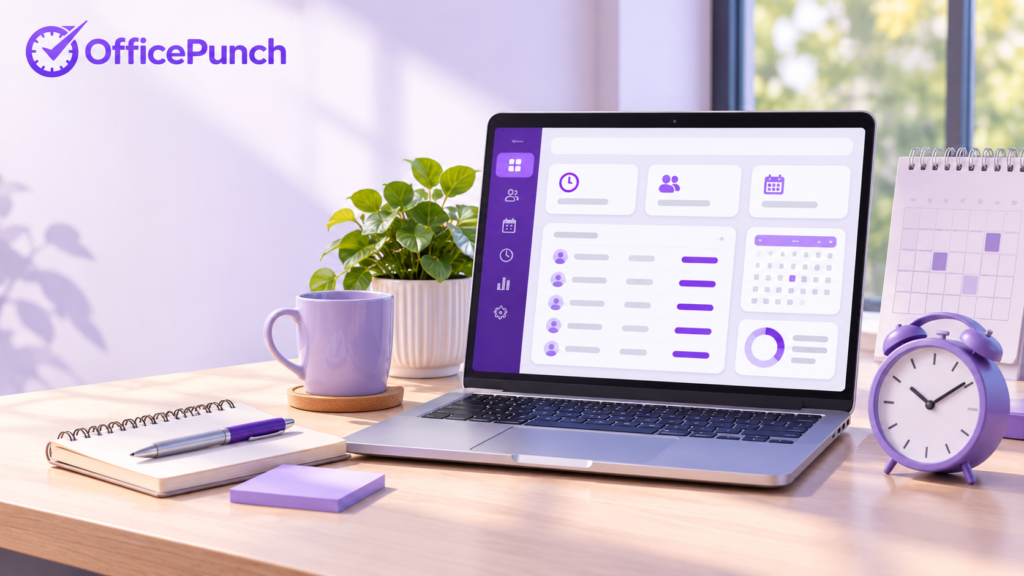
Office Punch records session start and end times automatically at PC login for Windows and Mac teams. Managers see a real-time daily attendance dashboard — including live break status for each employee — and can export records to Excel for any date range, all without manual timesheet entry. Start with the free plan for up to five users at officepunch.com.