You can improve employee productivity without micromanaging — and the two goals are not in tension when the right systems are in place. The difference between effective productivity monitoring and destructive micromanagement is not the tool you use. It is how transparently you use it, what you measure, and whether the data supports your employees or is used against them.
This guide covers the practical approaches Canadian employers use to track employee productivity, build accountability across remote and hybrid teams, and improve performance without creating the surveillance culture that drives disengagement and attrition.
Why Micromanagement Fails Where Monitoring Succeeds
Micromanagement is real-time control of how work gets done. Monitoring is visibility into whether work is getting done. The distinction matters because employee productivity is influenced by management practices and workplace conditions — and practices that reduce employee autonomy consistently reduce the productivity they were meant to protect.
Research across workforce analytics finds that around 40% of monitored employees feel monitoring software impacts morale negatively — almost always when monitoring is introduced covertly or applied disproportionately to the job function. Surveillance that creates anxiety simply replaces one productivity problem with another. The organisations that improve employee productivity through monitoring share a common characteristic: they use productivity data to support employees, not scrutinise them.
What Employee Monitoring Software Actually Measures
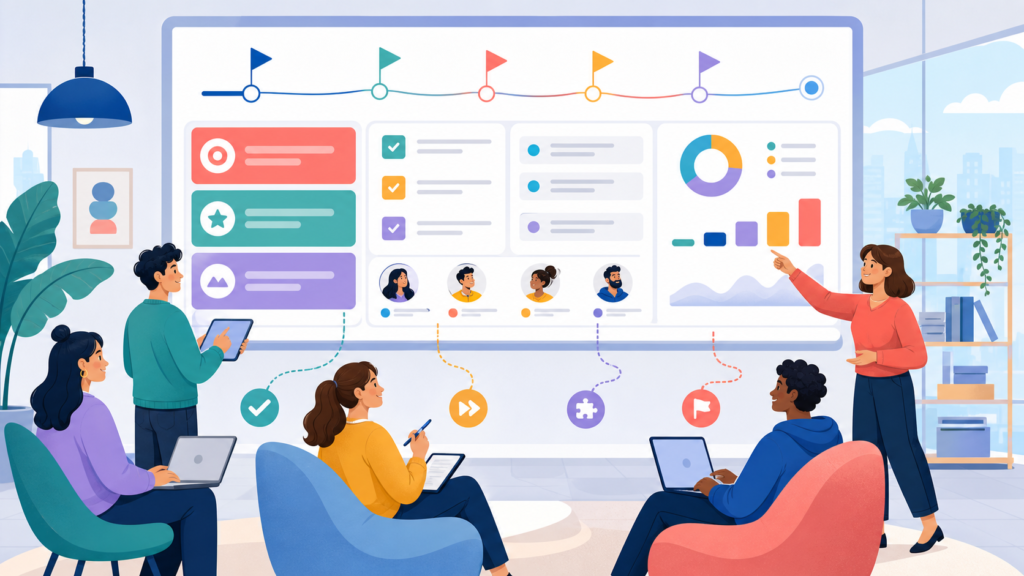
The global employee monitoring software market is projected to grow to $1.46B by 2032. Employee monitoring software captures objective data about how employees spend their working hours — app usage, active time versus idle time, web usage patterns, and attendance records. This activity tracking data gives managers an accurate picture of how work hours are being distributed across tasks, without requiring constant interruption of employees to report their own progress. Research indicates 60% of companies now use productivity tracking software, and 90% of employees are open to data collection when it is used to support their performance improvement rather than evaluate them punitively.
Employee monitoring tools range from basic attendance trackers to comprehensive productivity tracking software with behaviour analytics and workforce analytics dashboards. Analyzing essential functions helps digitize processes to eliminate redundant tasks. The right level of monitoring depends on team size, role requirements, and the specific productivity monitoring efforts the organisation is trying to support. Productivity tracking tools capture work activities for analysis — giving business leaders the employee data they need to make data driven insights about workforce performance without relying on subjective observation alone.
Best Employee Monitoring Software Features
The best employee monitoring software for most Canadian organisations balances monitoring employee productivity with employee privacy — capturing enough user activity data to identify patterns and provide productivity insights, without extending into surveillance of personal behaviour. Behavior analytics and productivity tracking software features give managers visibility into how employees engage with their tools and tasks across the working day. When assessing the best employee monitoring approach, look for tools that support customisable tracking methods, transparent employee data policies, and reporting features that make productivity monitoring efforts actionable rather than merely informational.
Productivity Metrics That Matter
The most useful productivity metrics for improving performance without micromanagement are outcome-adjacent rather than activity-based. Active time as a proportion of logged hours, time spent on core job function tasks versus administrative overhead, and idle time patterns across the working day each reveal where capacity is being used well and where it is being lost. These performance metrics help managers assess productivity and measure productivity accurately without reducing employee performance to a raw hour count. Productivity insights drawn from this data help business leaders track productivity trends over time, identify where employee workload is unsustainable, and target interventions that genuinely improve outcomes.
Key performance indicators should be set at the team and individual level before monitoring begins, so that productivity data is interpreted against agreed standards rather than arbitrary baselines.
Productivity Intelligence vs Surveillance
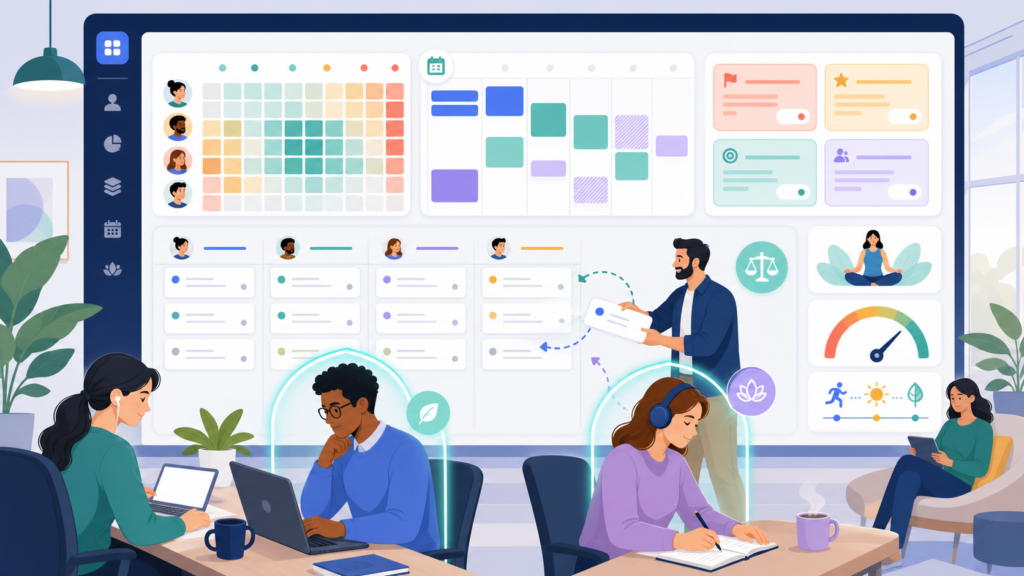
Productivity intelligence is the structured use of an employee monitoring system to identify bottlenecks, support resource allocation decisions, and inform management conversations about workload and process improvement. Employee surveillance is the use of the same data to watch individuals in real time with the intent of catching infractions. The first improves team productivity — employee monitoring can increase productivity significantly when implemented transparently, and employee monitoring helps reduce distractions that cost organisations billions annually. The second damages employee well being and trust, and turns employee activity data from a support tool into a source of anxiety.
Deep monitoring capabilities — keystroke logging, continuous video, behaviour analytics — sit firmly on the surveillance end of the spectrum and require careful legal and ethical justification under Canadian privacy legislation.
Employee Monitoring Software Legal Requirements in Canada
Employee monitoring software legal obligations in Canada rest on consistent principles across all provinces. Federally regulated employers are subject to PIPEDA. BC, Alberta, and Quebec have equivalent provincial privacy laws — PIPA in BC and Alberta, Law 25 in Quebec. Ontario’s Working for Workers Act, 2022 (S.O. 2022, c. 7) requires employers with 25 or more employees to maintain a written electronic monitoring policy.
Monitoring systems must be disclosed to employees before deployment. Location tracking, keystroke logging, and web usage monitoring each require informed consent. Data collected must be limited to what is necessary, stored securely with appropriate access controls, and not retained beyond the period required.
Building Monitoring Systems That Improve Productivity
The most effective monitoring systems for improving employee productivity are built on transparency, proportionality, and purpose. Companies using monitoring software can optimize time costs and reduce operational expenses.
Transparency First
Involving employees in monitoring decisions builds trust and increases adoption. Transparency about monitoring practices improves employee relationships in ways that covert monitoring permanently damages — and employee privacy concerns are significantly reduced when employees understand exactly what tracking methods are in use and why. When employees understand what monitoring software captures, why it is being used, and how the data will be applied before the system is switched on, they are more likely to engage constructively. Set clear, measurable objectives before monitoring begins so employees know what success looks like and how productivity data connects to their performance reviews.
Optimize Workflows and Eliminate Redundant Processes
Improving employee productivity involves clear goal-setting and process optimisation alongside monitoring. Providing appropriate technology reduces repetitive tasks that consume capacity without generating value. Eliminating duplicate processes and organizing workflows enhances overall efficiency beyond simply increasing headcount. Defining targets helps employees prioritise tasks and measure success — and encouraging task prioritization over multitasking can significantly increase efficiency across the team. Task management structures that clarify priorities and reduce decision fatigue give employees the conditions they need to do their best work, with monitoring data revealing where the remaining friction points are in the organization’s workflow.
Proportionate Data Collection
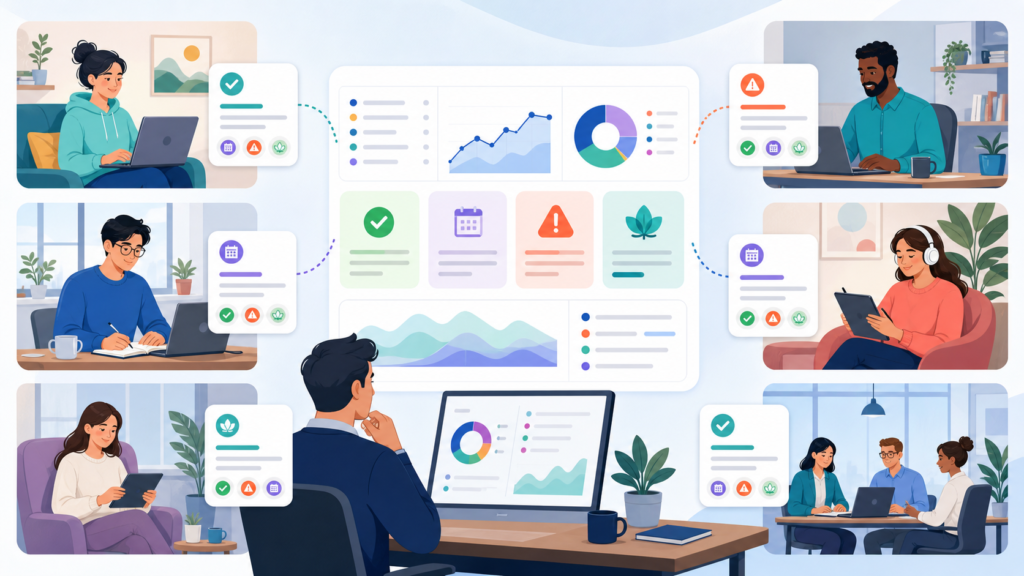
Not all roles require the same level of monitoring. Remote employees working on defined deliverables may need only attendance and active time data; teams managing sensitive data may warrant more detailed activity monitoring. Applying monitoring proportionately reduces privacy exposure and morale impact while preserving the productivity intelligence managers need. Data security is a core obligation: web usage logs, activity records, and screenshot images must be stored with encryption and role-based access controls.
Use Data to Improve, Not Judge
Regularly review productivity data to identify improvement opportunities rather than individual infractions. Creating open channels for communication around monitoring data helps employees raise concerns about workload or process friction before those issues compound into sustained productivity problems. Analysing productivity trends reveals where bottlenecks are forming in the organization’s workflow, where workload distribution is unbalanced, and where process changes would improve team performance more effectively than individual management. Automated time capture and data driven insights allow managers to track progress against goals in real time and optimize workflows based on evidence rather than instinct. Employee autonomy increases satisfaction and effectiveness — monitoring systems that give employees visibility into their own productivity data support that autonomy rather than undermine it.
Improving Productivity for Remote Employees and Hybrid Teams
Remote and hybrid teams face particular productivity challenges that monitoring systems are well positioned to address — provided the monitoring approach is adapted to the distributed work context. Remote workers and distributed teams need monitoring approaches that work consistently across company devices without requiring managers to remotely access individual machines in real time.
What Remote Employees Actually Need
For remote employees, the productivity barriers most often traced in workforce analytics data are access to information, unclear priorities, and insufficient feedback cycles — not lack of effort. Research suggests 47% of digital workers struggle to find critical information, and productivity increases when managers use monitoring data to identify and remove structural blockers rather than simply confirm presence.
Flexibility in work options helps prevent employee burnout — a risk in remote teams where the boundary between work and personal time is less defined. Monitoring systems that track active work hours without extending into personal time respect that boundary. Location tracking features — including GPS tracking for field-based roles and geo-location restrictions for office-based remote workers — add a verification layer for organisations that need to confirm employees are working from approved locations.
Hybrid Team Consistency
For hybrid teams, monitoring systems provide a consistent productivity baseline that direct observation cannot supply for distributed members. In office staff and remote employees should be measured against the same productivity metrics and key performance indicators — not different standards based on physical visibility.
Free Employee Monitoring Software and Where It Fits
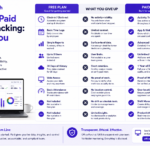
Free employee monitoring software typically covers basic activity tracking — attendance records, app usage summaries, and active time logging — without the deeper monitoring capabilities of paid platforms. For small teams evaluating monitoring tools before full deployment, free employee monitoring provides enough productivity data to establish baselines and identify obvious gaps.
Detailed reports, workforce analytics, and customisable productivity dashboards are typically premium features. For organisations using monitoring data to inform workforce planning and performance reviews, paid plan reporting capabilities add significant operational value.
Non-Monitoring Approaches That Improve Productivity
Monitoring software is one lever for improving employee productivity — not the only one. Employee performance can be improved by giving regular feedback and recognition alongside monitoring data — the two work together more effectively than either does alone. Investing in employee training supports skill development and closes the gap between current capability and role requirements. Creating career development opportunities improves employee retention and engagement — two of the strongest predictors of sustained productivity. Timely recognition fosters employee motivation, surveys can identify internal challenges that productivity data alone does not surface, and good communication practices are crucial in enhancing team collaboration.
A supportive work environment promotes employee well being in ways no monitoring system can replicate. Effective leadership significantly impacts employee engagement more than any tracking tool.
Why Choose Office Punch
Office Punch gives Canadian employers the attendance and activity tracking foundation that supports genuine productivity improvement — without the invasive monitoring that damages employee trust and engagement.
The platform captures clock-in and clock-out times automatically on system startup across desktop and laptop devices, tracks active versus idle time throughout the working day, and takes random-interval screenshots as verifiable proof of work — all visible through a real-time web app dashboard. IP-based and geo-location-based punch restrictions ensure that attendance and activity records reflect verified, approved work sessions.
Premium plans include activity tracking, screenshots, detailed reports, and custom reporting — giving managers the productivity intelligence they need to support their teams with data rather than instinct. The free plan provides basic attendance tracking access, and phone support is available on premium tiers for teams scaling their monitoring approach.
Frequently Asked Questions
How can I improve employee productivity without micromanaging?
Improve employee productivity through structured monitoring systems that provide visibility into active time, idle patterns, and work hour distribution. Set clear key performance indicators before monitoring begins, share productivity data with employees, and use data to identify workflow bottlenecks and workload imbalances rather than monitor individual behaviour minute by minute.
Is employee monitoring software legal in Canada?
Employee monitoring software legal requirements in Canada require employers to disclose monitoring before it begins, obtain informed consent, and limit data collection to what is necessary. Ontario employers with 25 or more employees must maintain a written electronic monitoring policy under the Working for Workers Act, 2022. Federal employers are subject to PIPEDA; BC, Alberta, and Quebec have equivalent provincial privacy laws.
What should I look for in free employee monitoring software?
Free employee monitoring software typically covers basic attendance records, active time tracking, and app usage summaries — sufficient to establish productivity baselines for small teams. For organisations that need detailed reports, workforce analytics, behaviour analytics, or customisable productivity dashboards to improve productivity, a paid plan is more appropriate. Evaluate whether the free tier meets your actual monitoring needs before assuming a premium upgrade is necessary.
How do monitoring systems affect employee well being?
Monitoring systems affect employee well being positively when transparent, proportionate, and used to support rather than scrutinise employees. Covert or excessive monitoring consistently increases stress and reduces morale. When employees understand what is tracked and trust that data is used for coaching rather than surveillance, monitoring systems support rather than damage well being and long-term productivity. Employee monitoring can increase productivity by 40% in three days.
What productivity metrics matter most for remote employees?
The most useful productivity metrics for remote employees are active time as a proportion of logged hours, time spent on core job function tasks versus administrative work, idle time patterns across the working day, and attendance consistency against scheduled hours. These metrics reveal genuine productivity patterns without reducing performance to raw hour counts. Key performance indicators set at the individual and team level give remote employees a clear standard to work toward.
How does data security apply to productivity monitoring data?
Productivity monitoring data — including activity records, web usage logs, and screenshot images — is personal information subject to PIPEDA and applicable provincial privacy legislation. It must be stored with encryption, protected by role-based access controls, and retained only for the period necessary for the stated monitoring purpose. Data breaches involving employee monitoring data carry significant legal and reputational risk, making data security a core requirement of any monitoring system deployment.
What is productivity intelligence and how is it different from surveillance?
Productivity intelligence is the structured analysis of monitoring data to identify workflow bottlenecks, support resource allocation, and inform management decisions that improve team performance. Surveillance is the real-time observation of individual employees to monitor behaviour and catch infractions. Productivity intelligence uses aggregate productivity trends and data-driven insights to support employees. Surveillance uses the same tools to watch individuals — and consistently produces the morale and trust damage that reduces the productivity it was meant to improve.
Conclusion: Visibility Supports People, Surveillance Replaces Them
Improving employee productivity without micromanaging means making oversight purposeful. Monitoring systems that give managers visibility into productivity trends, workload patterns, and workflow bottlenecks provide the data needed to support employees effectively — rather than watch them to catch problems.
The organisations that improve productivity consistently invest in transparent monitoring, clear expectations, employee development, and management practices that treat productivity data as a support tool rather than a control mechanism.
Disclaimer
This content provides general guidance on employee monitoring and productivity practices for Canadian employers. It is not legal advice. Legal requirements vary by province and employment type. Consult a qualified Canadian employment lawyer before implementing any monitoring software in your workplace.
Ready to build a transparent, compliant activity tracking system for your team? Book a demo with Office Punch and see how Canadian employers improve workforce visibility — without the surveillance culture that damages the productivity it is meant to protect.