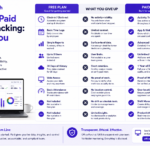
Remote employee productivity monitoring is ethical when it is transparent, proportionate, and grounded in a clear business purpose — and it crosses a line when it becomes covert surveillance that invades employee privacy beyond what the job reasonably requires. For Canadian employers managing remote employees, the question is not whether to monitor just to measure productivity, but how to do it in a way that builds trust rather than eroding it.
This guide explains what ethical remote employee monitoring looks like in a Canadian context, what the law requires, and how to build a monitoring framework that gives your business the visibility it needs without damaging the trust your team depends on.
Why Remote Employee Monitoring Systems Have Become a Business Necessity
According to Statistics Canada’s Labour Force Survey, approximately 24% of employed Canadians worked from home in some capacity as of late 2024 — a figure that has stabilised well above pre-pandemic levels of around 4% in 2016. For employers managing hybrid and fully remote employees, the challenge is real: how do you maintain workforce visibility, protect sensitive data, and ensure productivity without being physically present?
Remote work removes the natural oversight a shared office provides. Managers cannot observe whether remote workers are engaged, whether company devices are being used appropriately, or whether data security risks are emerging from employee activity. Remote employee monitoring fills that gap — but only when implemented thoughtfully.
The global employee monitoring software market is growing rapidly, with multiple research firms projecting it to reach several billion USD by 2032 — driven by the expansion of remote work, data security requirements, and compliance obligations across distributed teams. Canadian businesses are increasingly operating under compliance frameworks — PIPEDA federally, and provincial equivalents in BC, Alberta, and Quebec — that make structured, documented monitoring not just advisable but necessary.
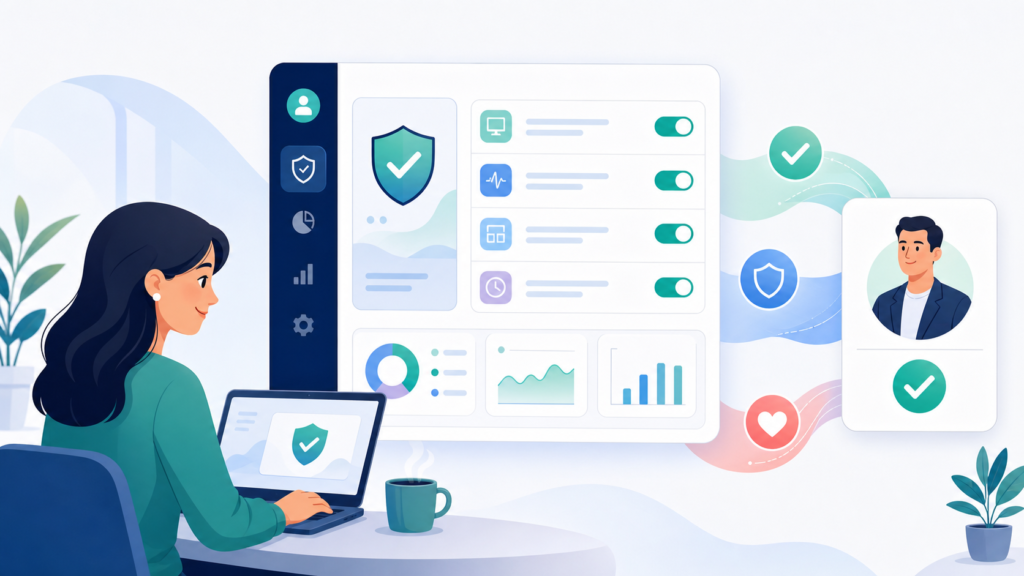
The Ethical Case For and Against Monitoring Remote Employees
The Case For Monitoring
Research consistently shows that structured, transparent monitoring can meaningfully improve productivity when implemented with clear objectives and employee awareness. Effective remote employee monitoring balances operational oversight with trust — and organisations tend to see the best outcomes when monitoring supports employees rather than surveils them.
Monitoring employee activity gives managers the data needed to identify bottlenecks in workflows, understand how time employees spend working hours is distributed, and make data-driven decisions about employee training, workload allocation, and process improvement. Employee monitoring tools help identify where productivity trends are declining before they become performance problems, and automated tracking helps ensure accurate payroll by eliminating manual timesheets.
From a data security standpoint, monitoring software provides automated alerts for security vulnerabilities, helps prevent data leaks, and supports data loss prevention policies by flagging unusual access to sensitive data. Insider threats — whether malicious or accidental — are significantly easier to detect and contain when employee activity on company devices is visible.
The Case Against Overmonitoring
The counterargument is equally grounded in evidence. Research from workforce analytics firms consistently finds that a significant proportion of monitored employees report negative impacts on morale when surveillance feels disproportionate or unexplained, and continuous surveillance can negatively impact employee engagement and trust across remote teams. Monitoring can lead to employee attrition due to low morale — a cost that quickly outweighs any productivity gain.
Overreliance on monitoring tools can create a culture of micromanagement that damages employee well being and the autonomy remote employees need to perform. When screens are captured at unpredictable intervals and every application is logged, the psychological toll can reduce the very productivity monitoring was meant to protect.
What Canadian Law Says About Employee Monitoring
Employee monitoring software legal requirements in Canada vary by jurisdiction, employment type, and what specifically is being monitored.
Federal and Provincial Requirements
Federally regulated employers and businesses without provincial private-sector privacy legislation are subject to PIPEDA (the Personal Information Protection and Electronic Documents Act). British Columbia, Alberta, and Quebec each have their own substantially equivalent private-sector privacy laws — PIPA in BC and Alberta, and Law 25 in Quebec. Ontario’s Working for Workers Act, 2022 (S.O. 2022, c. 7) requires employers with 25 or more employees to maintain a written electronic monitoring policy disclosing whether and how employees are monitored and how that data is used.
Employee monitoring legality across Canadian jurisdictions rests on three principles: employees must be informed, consent must be obtained before implementing tracking software, and monitoring must be limited to what is necessary for legitimate business purposes. Covert monitoring can lead to legal issues and significant employee distrust.
What Is and Is Not Permissible
Screenshot monitoring, activity tracking, keystroke logging with disclosure, and time tracking on company devices are broadly accepted in Canadian employment contexts when employees have been informed. Monitoring personal communications, capturing data from personal devices without consent, or using video recording beyond legitimate business necessity risks violating privacy legislation. The principle of data minimisation — collecting only what is strictly necessary to evaluate job function — is the clearest guide for staying within legal and ethical bounds.
For jurisdiction-specific guidance on electronic monitoring policies, refer to the Office of the Privacy Commissioner of Canada (OPC) at priv.gc.ca and the Ontario Ministry of Labour’s guidance on the Working for Workers Act.
What Ethical Remote Monitoring Looks Like in Practice
To make this concrete, consider a hypothetical scenario typical of many Canadian professional services firms: a company with 28 remote employees notices a consistent gap between scheduled hours and productive output after transitioning fully remote — but has no documented evidence to act on. After implementing transparent activity tracking with full employee disclosure and a written monitoring policy, management gains visibility into where working hours are being lost to undetected idle time. Structured check-ins and workload rebalancing follow.
The outcome in scenarios like this consistently hinges on one factor: employees being told exactly what is tracked, shown their own data, and involved in setting productivity expectations. Monitoring introduced transparently produces cooperation. Monitoring introduced without explanation produces resistance.
This is what ethical remote employee monitoring looks like in practice — and it is the framework every Canadian employer should build from.

Building an Ethical Monitoring Framework
Start With a Documented Policy
Documented policies help clarify tracking methods and purposes before monitoring begins. An effective policy covers what is monitored, why it is monitored, how long activity data is retained, who has access to such data, and how it is used in performance evaluation. Involving employees in software selection increases acceptance, and creating a formal monitoring policy enhances accountability on both sides.
Obtain Explicit Consent
Always obtain explicit consent before implementing any tracking software on employee computers or company devices. Consent should be informed — employees should understand what the monitoring software captures, including apps and websites visited, screenshots, and working hours. Employers should explain the business purpose behind monitoring initiatives clearly.
Limit Monitoring to Work Hours and Work Devices
Monitor only during working hours and on company-managed systems. Access controls that restrict monitoring software to company devices and approved remote access channels ensure that employee privacy outside work is protected. Extending monitoring into personal devices or time outside working hours crosses from operational oversight into personal privacy invasion.
Communicate Transparently
Clear communication about what is monitored prevents mistrust from taking root. Transparent communication about monitoring improves trust — particularly when employees understand the purpose is operational oversight and data security, not personal surveillance. Regular reviews of monitoring practices help ensure compliance with laws and give employees the opportunity to raise concerns before they affect morale.
Choosing the Right Staff Monitoring Software
The right employee activity tracking solutions depend on team size, data security requirements, and the level of visibility managers genuinely need.
What to Look for in Employee Monitoring Software
Effective employee monitoring software generates detailed reports on activity data, supports productive and unproductive categories for activity classification, and provides productivity analysis tools that help managers identify where employee performance needs support. Deep monitoring capabilities — including screenshot monitoring, behaviour analytics, and user activity logs — are valuable for high-security environments but should be applied proportionately to the job function.
For most remote teams, the most important features are attendance and activity tracking, time spent on approved applications, and customisable reporting dashboards that give managers operational oversight without capturing data beyond what is necessary.
Free Employee Monitoring Software
Free employee monitoring software can cover basic features including activity tracking and attendance logging for small remote teams. A free employee monitoring tier typically provides enough visibility to establish baseline productivity trends. Employers evaluating free employee tools should confirm that the platform meets Canadian data security requirements and that employee data is stored with appropriate access controls.
Why Choose Office Punch
Office Punch gives Canadian employers an ethical, transparent approach to remote employee monitoring — built around desktop and laptop-based attendance and activity tracking that employees understand and managers can act on.
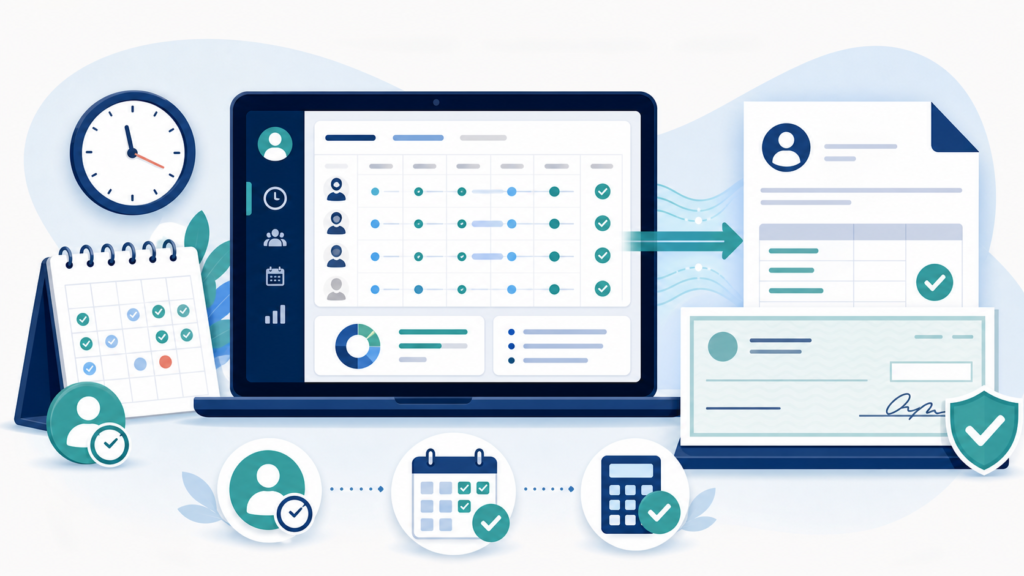
The platform captures clock-in and clock-out times automatically on system startup, tracks active versus idle time throughout the working day, and takes random-interval screenshots as verifiable proof of work — all surfaced through a real-time web dashboard. IP-based and geo-location-based punch restrictions ensure attendance records reflect verified presence at approved locations, supporting data security without invasive surveillance.
The free plan provides basic attendance access, while premium plans unlock activity tracking, screenshots, detailed reports, custom reports, province-specific overtime tracking, and phone support — giving Canadian employers the employee monitoring solutions they need to support remote workers compliantly and confidently.
Frequently Asked Questions
Is remote employee monitoring legal in Canada?
Remote employee monitoring is legal in Canada when employees are informed about what is being monitored, consent is obtained before monitoring begins, and data collection is limited to legitimate business purposes. Employee monitoring software legal requirements vary by province — Ontario mandates a written electronic monitoring policy for employers with 25 or more employees under the Working for Workers Act, 2022. Covert monitoring without disclosure risks violating PIPEDA and applicable provincial privacy legislation.
What is the most ethical way to monitor remote employees?
The most ethical approach combines transparent disclosure, explicit consent, and proportionate data collection. Inform employees about what monitoring software captures on their employee computers, explain the business purpose clearly, limit monitoring to working hours and company devices, and involve employees in the process. Prioritise outcome-based metrics over intrusive surveillance — monitoring active versus idle time and attendance is proportionate; recording every keystroke or enabling continuous video recording rarely is.
What employee monitoring solutions work best for remote teams?
The best employee monitoring solutions for remote teams balance visibility with trust. Look for software that tracks attendance, active versus idle time, and working hours with clear employee disclosure — rather than deep monitoring capabilities that capture personal activity beyond job function. Features like screenshot monitoring at random intervals, activity dashboards, and customisable reporting give managers operational oversight without the morale cost of continuous surveillance.
How can monitoring software improve productivity without damaging morale?
Monitoring software improves productivity without damaging morale when it is transparent, purposeful, and used to support employees rather than scrutinise them. Sharing activity data and detailed reports with employees — not just managers — creates accountability on both sides. Regular check-ins help address roadblocks identified through productivity tracking, and involving employees in monitoring policy decisions significantly increases acceptance and reduces the morale impact that covert monitoring consistently produces.
What data security risks does employee monitoring software address?
Employee monitoring software addresses data security risks including data leaks, insider threats, and unauthorised access to sensitive data on company devices. By tracking user activity, flagging unusual data transfers, and maintaining audit trails of access to restricted systems, monitoring software supports data loss prevention policies and helps organisations detect security vulnerabilities before they become data breaches. Automated alerts for policy violations give security teams the response time needed to contain incidents.
Does employee monitoring affect employee well-being?
Employee monitoring affects employee well being when it is excessive, covert, or disproportionate to the job function. Workforce research consistently shows that employees monitored without clear explanation or consent are more likely to report negative morale impacts — particularly when monitoring extends beyond working hours or creates a sense of constant observation. Monitoring that is transparent, limited to working hours and company devices, and used to support rather than punish employees consistently produces better outcomes for both well being and productivity.
Are there free employee monitoring software options for small businesses?
Free employee monitoring software covers basic activity tracking and attendance logging for small remote teams. A free employee monitoring tool typically includes time spent on applications, basic reporting, and attendance records — sufficient to establish productivity baselines. Canadian employers using free employee tools should verify that data is stored securely, that employee disclosure requirements under PIPEDA and applicable provincial privacy laws are met, and that the platform supports access controls needed to protect employee data.
Conclusion: Monitoring Built on Trust Delivers Better Results
Remote employee monitoring is ethical when it is transparent, proportionate, and connected to a clear business purpose. The organisations that get this right tell employees what is monitored and why, collect only the data that serves a legitimate operational need, and use that data to support performance rather than surveil behaviour.
When monitoring is transparent, the evidence is clear: it improves productivity, protects sensitive data, and gives managers the visibility to support remote workers effectively. The ethical line sits exactly where trust begins.
Disclaimer
This content provides general guidance on employee monitoring practices and Canadian privacy law obligations. It is not legal advice. Legal requirements vary by province and employment type. Consult a qualified Canadian employment lawyer for advice specific to your organisation before implementing any monitoring software.
Ready to monitor your remote team with transparency and confidence?
Book a demo with the best employee monitoring software, Office Punch and see how Canadian employers are building verified, ethical attendance and activity tracking from desktop devices.